Is Pilates ‘real’ strength training?
For many people, social media has become a wall of “if you’re not lifting heavy, you’re doing it wrong”. It’s usually well‑meant, but it can feel intense and a bit scary when you’re already juggling work, family and want to do the right thing for your body.
We’re hearing it in the studio as well: “I’m going to stop Pilates for a bit and just focus on lifting weights at the gym.” If you’ve ever thought that – especially in this season of life – this is for you. If you’re not lifting heavy in a gym, does it still count?
You absolutely should care about getting stronger as you age. Muscle and strength are non‑negotiable for health, bone, mood and energy. There’s a really common belief that to train ‘properly’ you have to leave Pilates behind and move fully into the weights area… but that’s only one version of the story.
If an online creator tells you the only way to get strong is in the weights area, you don’t have to take it as gospel, (it might just be your algorithm talking).
“There’s a really common belief that to train ‘properly’ you have to leave Pilates behind and move fully into the weights area… but that’s only one version of the story.”
YOUR MUSCLES DON’T SPEAK ‘PILATES’ OR ‘GYM’
Simply put, strength training is your muscles working against resistance. That might be dumbbells, barbells, kettlebells, cables, bands, springs or your own bodyweight against gravity. When you work hard enough, often enough and progress the load over time, your muscles adapt by getting stronger.
MUSCLES RESPOND TO ONE MAIN THING:
BEING ASKED TO WORK HARD AGAINST RESISTANCE (MECHANICAL TENSION).
Most guidelines now suggest adults should do some form of muscle‑strengthening work at least twice a week for long‑term health, not just cardio. The good news is that they don’t say it has to happen in a commercial gym or only with barbells, the format matters less than the fact you’re regularly challenging your muscles.
How Pilates already ticks the strength box
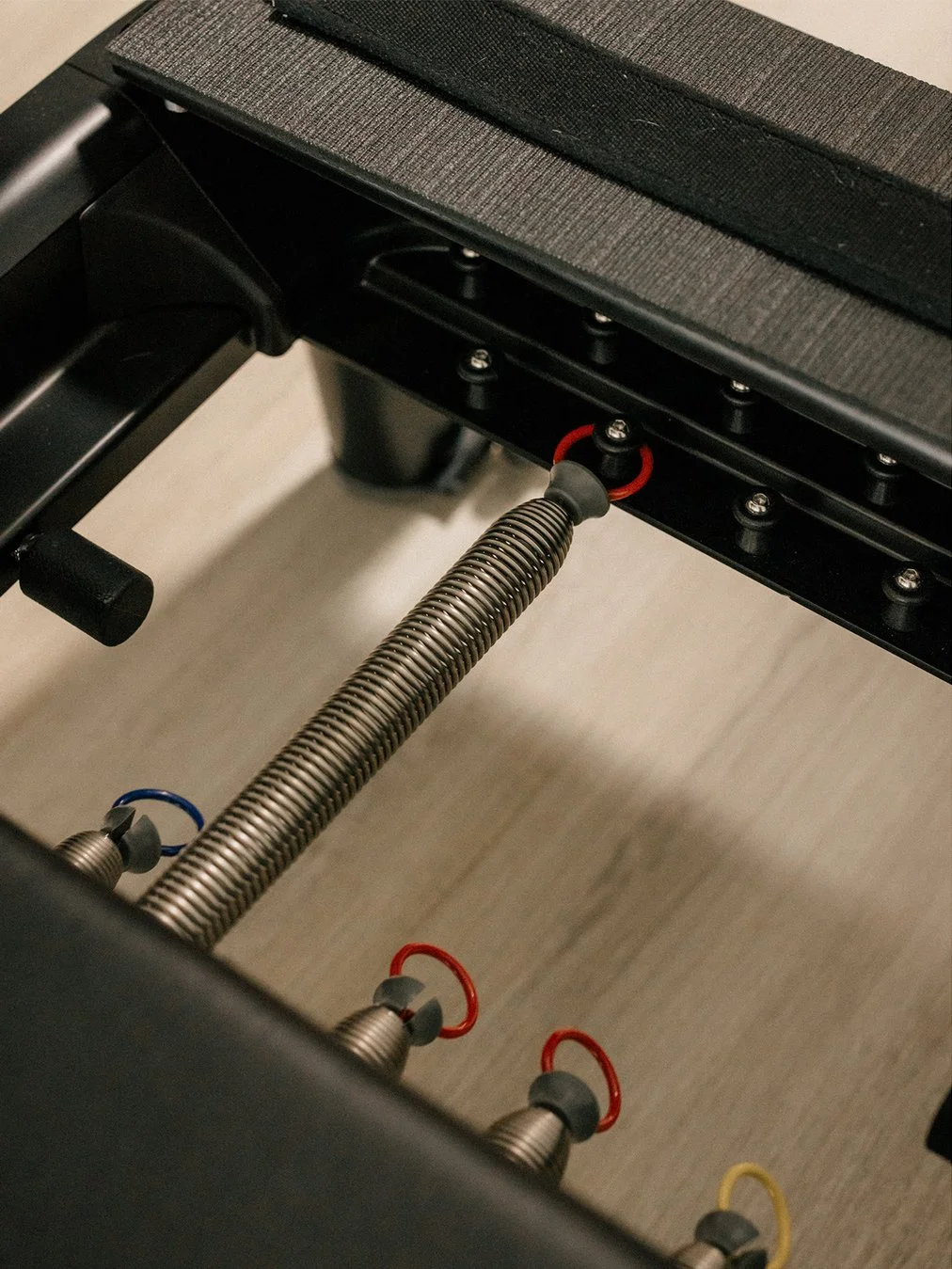
The three types of strength training you already do:
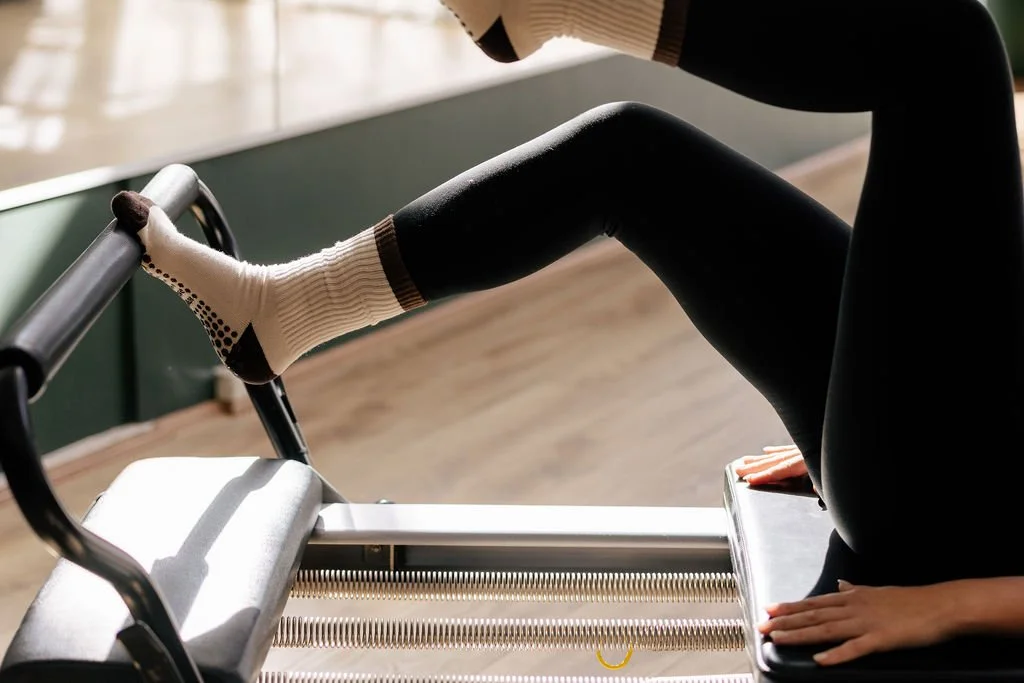
Springs
Reformer | Combo Chair | CadillacBodyweight
Mat | Dynamics | Barre | ArcGravity + Levers
Reaching Further | Working Longer + Lower
They provide resistance as you press the carriage away and as you control it back in, so your muscles are working concentrically, eccentrically and isometrically to stabilise you.
Because we can add or remove springs, change the length of the lever (for example, longer legs or arms), and move from two‑leg to single‑leg work, we can progressively increase the challenge just like you would with heavier dumbbells in the gym.
Many physiotherapists and Pilates sources classify reformer Pilates (and additional Pilates apparatus with springs) as a form of resistance training, especially when springs and body position are used thoughtfully.You’re doing controlled strength and endurance work under load. It just feels different because you’re also being asked to breathe, stabilise and move with precision, not simply move something from A to B.
“Different tools, same goal: load your muscles enough that they have to adapt.”
Where mat Pilates fits into the strength picture
Matwork uses gravity, long levers and time under tension to challenge your trunk, hips and shoulders.
Research on mat‑based Pilates shows improvements in trunk strength, muscular endurance and flexibility in sedentary adults, particularly around the abdominals and lower back.
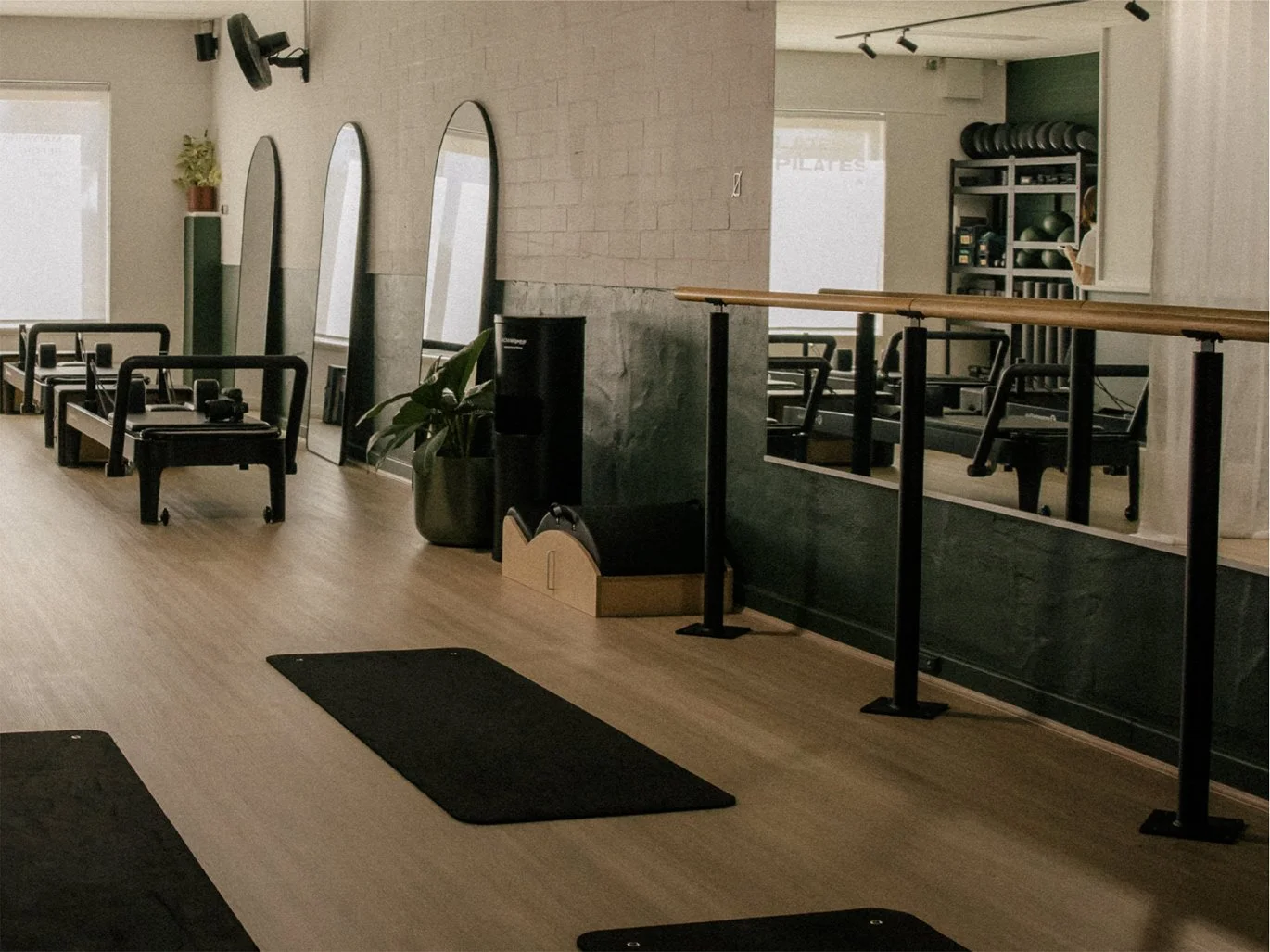
For people who are newer to training, or coming back from time off, mat Pilates can improve muscular endurance and contribute to strength gains. Systematic reviews also suggest that there are no Pilates applications necessarily better than other exercise for pure strength outcomes, but it performs about as well as comparable programs for strength, balance and flexibility – with the added benefit of strong core and control work.
So if you personally feel your strongest when you’re doing consistent matwork, that makes sense: it’s high‑quality bodyweight training with a big focus on trunk stability, end‑range control and moving your own body in space.
In practice, a week that includes reformer, mat and (if you enjoy it) some external weights is giving you springs, bodyweight and heavier loading. Three different strength flavours that all support each other.
Research shows both heavier loads (fewer reps) and lighter loads (more reps) can build similar muscle when working close to, but not failure.
We can increase how much work our muscles have to do in Pilates by:
Adding/changing springs
Lever lengthening
Increasing range of motion
Joint angle specificity
But what about heavy lifting and bone density?
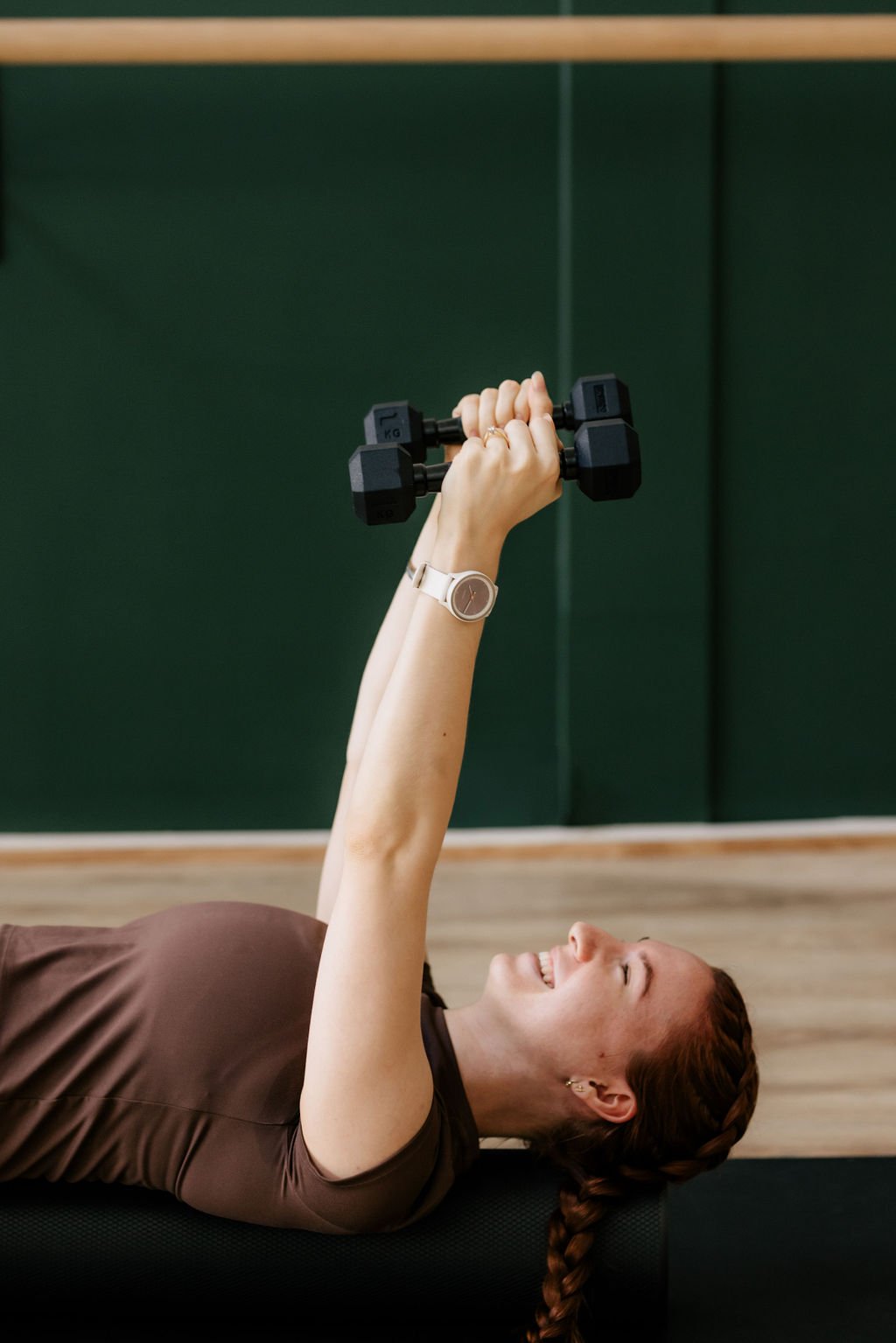
Heavier external weights and impact tend to be more effective for maximising bone density and building higher levels of muscle mass, especially later in life.
That doesn’t mean Pilates is off the table for your bones.
A balanced way to look at it is:
Traditional weight training is usually better for maximal strength and bone loading.
Pilates gives you the foundation – alignment, control, stability and strength endurance – to lift better, more comfortably and more confidently if you choose to pick up heavier weights.
They can work really nicely together in the same week when you let them.
three questions you should consider about your gym-only program.
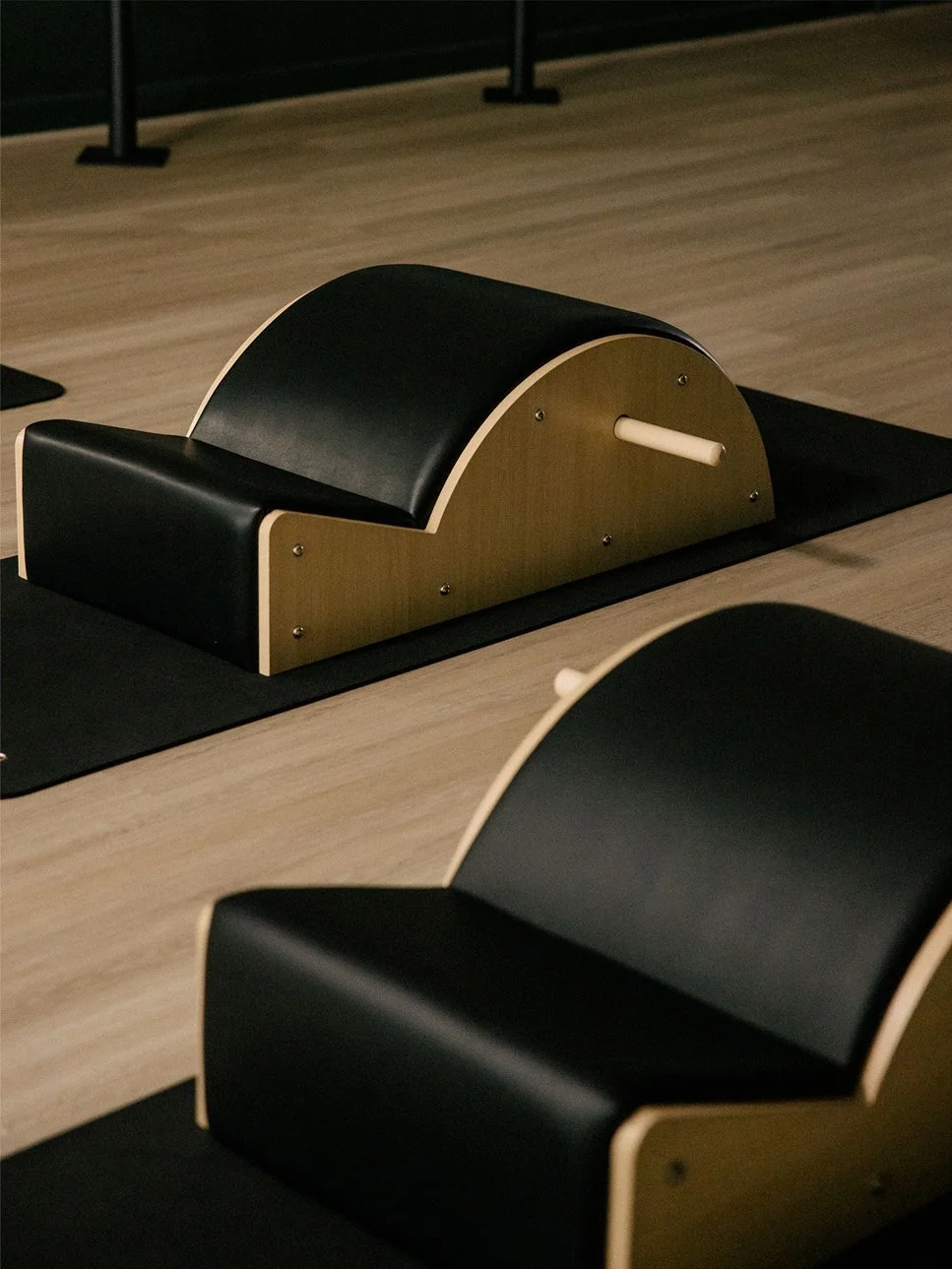
one. Where is your spinal movement in a gym program?
Most gym programs are built around a simple list of compound lifts: squats, deadlifts, presses, rows and maybe some machines.
They tend to keep the spine fairly still and neutral (for good reason under heavy load), and there’s usually not much time given to segmental spinal movement, rotation or articulation.
Pilates, on the other hand, is very interested in how your spine moves.
We flex, extend, rotate and side‑bend through controlled ranges, building strength and awareness in all those directions, not just in one “neutral” position.
That kind of spinal mobility and control matters when you’re living your life. You need spinal mobility for bending, twisting, reaching, picking kids up, carrying shopping, sitting at a desk and when you’re under a barbell. It’s often the missing piece when someone is strong on paper but still feels tight, sore, sticky and restricted through their back.
two. Where is the mobility and flexibility?
Another common side effect of a gym‑only routine is feeling tighter and stiffer, especially around hips, shoulders and the thoracic spine.
If lifting is not balanced with proper mobility work, ranges of motion can actually shrink over time and movement starts to feel locked up. Pilates sessions are deliberately programmed to take joints through fuller, more controlled ranges of motion while you’re under light to moderate load.
The combination of mobility plus strength is what helps you feel open and supported, not floppy at one extreme or rigid at the other.
This is why so many people use Pilates alongside other training: they notice their squats get deeper, their deadlifts feel smoother, and their shoulders cope better with pressing when they keep some reformer in the mix.
three. Where is the strength outside of the big compound lifts?
Lots of generic programs under‑dose unilateral work, deep stabilisers, end‑range strength and fine motor control around hips, shoulders and feet.
Pilates spends far more time working those smaller stabilising muscles, challenging single‑leg balance, and asking you to control the load in multiple planes (twisting, side‑bending, working at different angles and tempos, and holding positions instead of bouncing through them).
Strength training builds your capacity to produce force.
Pilates teaches your body how to organise that force through good alignment, core support and joint control.
You need both to feel strong and capable.
So… do you have to quit Pilates to get strong?
No. If you love lifting weights and it’s working for you, brilliant! Keep going.
However, if your feeds are sending messages that imply your Pilates practice is ‘less-than’, it can make you question whether your efforts count. We feel that’s fairly unhelpful and leads to more negative self-talk.
Springs and bodyweight still load your muscles at different lengths and tensions, building the control and strength that let you chase heavier work when and if you want to. You decide how far you go. Take the harder options, refine your form and let your Pilates practice be a meaningful part of your strength training.
PILATES ISN’T SOMETHING WE GROW OUT OF, IT’S SOMETHING THAT GROWS WITH US.
-
Kraemer WJ, Adams K, Cafarelli E, et al. American College of Sports Medicine position stand: Progression models in resistance training for healthy adults. Med Sci Sports Exerc. 2002;34(2):364–380.
American College of Sports Medicine. ACSM Position Stand: Resistance Training Prescription for Muscle Function, Hypertrophy, and Physical Performance in Healthy Adults. Med Sci Sports Exerc. 2026;58(4):e123–e145 (overview of reviews).
O’Bryan SJ, et al. Progressive resistance training for concomitant increases in muscle strength and bone mineral density in older adults: A systematic review and meta‑analysis. Sports Med. 2022.
Bullo V, Bergamin M, Gobbo S, et al. The effects of Pilates exercise training on physical fitness and wellbeing in the elderly: A systematic review for future exercise prescription. Prev Med. 2015;75:1–11.
Rodrigues de Souza D, et al. Effects of Pilates on muscle strength, postural balance and quality of life in older adults: A randomised controlled trial. Clin Interv Aging. 2015;10:1–8.
Barker AL, et al. Pilates improves physical performance and decreases risk of falls in older adults: A systematic review and meta‑analysis. Physiotherapy. 2021.
Giangregorio L, et al. Effectiveness of Pilates and yoga to improve bone density in adult women: A systematic review and meta‑analysis. Osteoporos Int. 2021.
Healthy Bones Australia. Exercise Prescription to Support the Management of Osteoporosis. Healthy Bones Australia; 2024.